
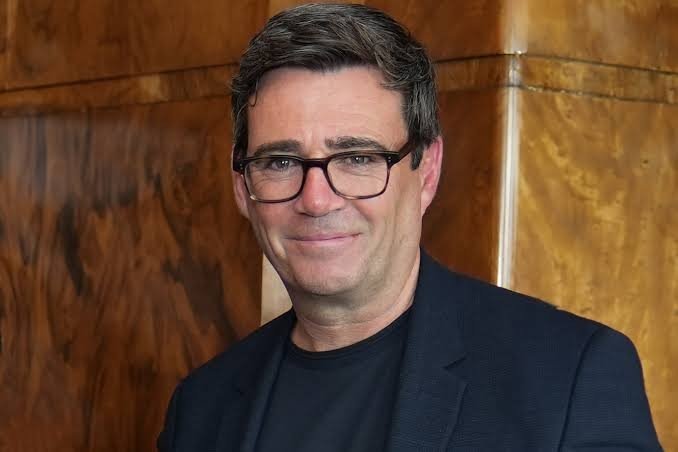
Andy Burnham is a British Labour and Co-operative politician who became Prime Minister of the United Kingdom on 20 July 2026. His rise to Downing Street followed a long political career that began in the House of Commons and later saw him become Mayor of Greater Manchester.
Born on 7 January 1970, Burnham is 56 years old in 2026. He grew up in Cheshire and developed an interest in politics at a young age. His career has been shaped by a strong focus on public services, the NHS, social care, transport, regional development and giving greater powers to local communities. Before becoming Prime Minister, he spent nine years as Mayor of Greater Manchester. His time in the role helped turn him into one of Labour’s best-known political figures and earned him the nickname “King of the North”.
Andy Burnham Early Life and Education
Birth and Family Background
Andrew Murray Burnham was born in Aintree, Lancashire, on 7 January 1970. His family later moved to Culcheth in Cheshire, where he grew up. His father, Roy Burnham, was a telephone engineer and a committed socialist, while his mother, Eileen, worked as a GP receptionist. His parents had a strong influence on his values and his interest in social justice.
Roy Burnham died on 14 September 2026, aged 85, after suffering from Alzheimer’s disease. His experience of caring for his father has had a major influence on Burnham’s views on social care. Burnham has two brothers, Nick and John. Both have worked in education and public service.
Education and University Years
Burnham attended St Aelred’s Catholic High School before studying English at Fitzwilliam College, University of Cambridge. His university years were important for both his personal and political development. He met his future wife, Marie-France van Heel, at Cambridge and became increasingly involved in Labour politics. He joined the Labour Party at the age of 15, showing that his interest in politics started long before he entered Parliament.
Andy Burnham Political Career
Entering Parliament
Burnham became a Member of Parliament for Leigh in June 2001. He quickly progressed through Labour’s ranks and gained experience in government departments. His early parliamentary career included junior ministerial positions before he entered the Cabinet. His rise through government was relatively rapid, reflecting his strong political skills and growing reputation within Labour.
Cabinet Positions
Between 2007 and 2010, Burnham held three major Cabinet positions. He first became Chief Secretary to the Treasury, where he dealt with government spending and public finances. He then became Secretary of State for Culture, Media and Sport, taking responsibility for major areas of British cultural and sporting policy.
In 2009, he became Secretary of State for Health. His time at the Department of Health strengthened his reputation as a politician closely associated with the NHS. The official government record confirms all three Cabinet positions.
Andy Burnham and the Labour Party
After Labour lost power in 2010, Burnham remained a senior opposition politician. He served as Shadow Secretary of State for Health, Shadow Secretary of State for Education and Shadow Home Secretary. He also stood for the Labour leadership on more than one occasion. His political direction changed significantly after he left Westminster and entered regional government. That move eventually became one of the most important stages of his career.
Andy Burnham as Mayor of Greater Manchester
Becoming Mayor
Burnham became the first Mayor of Greater Manchester in 2017 and won re-election in subsequent contests. The role gave him direct responsibility for a major English city region and allowed him to develop policies outside the Westminster system. Greater Manchester became closely linked with his political identity.
The Bee Network
One of his best-known projects was the development of the Bee Network, designed to create a more integrated public transport system across Greater Manchester. The wider plan brought buses and other forms of transport into a more joined-up network. Burnham argued that better public transport could reduce costs for families, improve access to work and support economic growth. His approach to transport became one of the strongest examples of his preference for greater public control.
Devolution
Devolution became another major part of Burnham’s work in Greater Manchester. During his time as mayor, the region gained additional responsibilities covering areas such as transport, housing, skills and economic development. A major devolution agreement gave Greater Manchester greater control over important regional decisions. Burnham has consistently argued that decisions affecting local communities should not always be made in Westminster. This belief has now become a central part of his national government.
Andy Burnham During the COVID-19 Crisis
Burnham became nationally prominent during the COVID-19 pandemic in 2020. He strongly opposed restrictions imposed on Greater Manchester without what he considered adequate financial support for workers and businesses. The disagreement with the UK Government brought him considerable national attention. Supporters praised him for defending people in northern England, while critics accused him of turning a public health dispute into a political confrontation. The episode helped strengthen his reputation as a politician prepared to challenge Westminster.
Andy Burnham Wife
Marie-France van Heel
Andy Burnham is married to Marie-France van Heel, often known as Frankie. The couple met while studying at Cambridge and married in 2000. She has a professional background in marketing and business and has generally maintained a private life away from Westminster politics.
Interest in Marie-France increased significantly after Burnham entered Downing Street. Her husband has often kept family matters away from political debates, and she has similarly maintained a relatively low public presence. Their long relationship began during their university years and has continued through Burnham’s move from Parliament to regional government and eventually the premiership.
Andy Burnham Children
Andy Burnham and Marie-France van Heel have three children: Jimmy, Rosie and Annie. The family has largely protected the children’s private lives. As Burnham has moved into national leadership, there has naturally been greater interest in his family, but personal details about his children remain limited.
Andy Burnham Daughter
Burnham has two daughters, Rosie and Annie, alongside his son Jimmy. Both daughters have generally stayed outside political life. Burnham has made a clear distinction between his public responsibilities and the private lives of his family.
Andy Burnham Net Worth
There is no officially confirmed figure for Andy Burnham’s personal net worth. Various financial publications have produced estimates, with some placing his wealth above £1 million. However, such figures should not be treated as an exact valuation because a complete personal balance sheet has not been published.
His finances have become more visible since returning to Parliament. In August 2026, Burnham declared nearly £350,000 in political donations received during the period before he became Labour leader and Prime Minister. He also declared hospitality and financial interests, while he and his wife jointly own a rental property in London. These political donations are not the same as personal wealth.
Andy Burnham Becomes Prime Minister
On 20 July 2026, Burnham became Prime Minister of the United Kingdom. The official government record confirms his appointment and his previous Cabinet experience. His first speech outside Downing Street placed strong emphasis on improving living standards, tackling rough sleeping, easing cost-of-living pressures and developing a long-term programme for Britain. His appointment also made him the UK’s first Labour and Co-operative Prime Minister, a significant milestone for the Co-operative political tradition.
Andy Burnham Government and Cabinet
As Prime Minister, Burnham is responsible for choosing ministers and directing the work of the UK Government.
His administration has placed particular attention on:
- Economic growth
- Living costs
- Social care
- Housing
- Public services
- Regional development
- Devolution
- Transport
- Infrastructure
- National security
His government faces difficult financial choices, with pressure to fund social care and other priorities while controlling taxation and borrowing. The October 2026 Budget is expected to be a major test of his economic plans.
Andy Burnham Political Views
Burnham is strongly associated with the NHS and publicly funded services. His experience as Health Secretary and Greater Manchester mayor helped shape his belief that government should play an active role in supporting communities. Social care has become particularly important to him because of his father’s experience with Alzheimer’s disease.
He also supports stronger regional government and believes England’s regions should have greater control over transport, housing, skills and economic development. His government has continued to place devolution at the centre of its plans for changing the way Britain is governed.
Andy Burnham Religion and Personal Values
Burnham was raised as a Roman Catholic and has continued to identify with his Catholic faith. His religious background has influenced his views on social justice, poverty and support for vulnerable people. As Britain’s first Catholic Prime Minister, his government has also proposed removing historic legal restrictions affecting Catholic and Jewish prime ministers and their role in advising the monarch on Church of England appointments.
Andy Burnham Legacy and Future
Andy Burnham’s political journey is unusual. He moved from Westminster minister to regional mayor before returning to national politics as Prime Minister. His strongest achievements are associated with Greater Manchester devolution, public transport reform, the Bee Network and his advocacy for northern England.
His biggest challenge is now much broader. Running the whole United Kingdom requires balancing the needs of England’s regions with Scotland, Wales and Northern Ireland while managing economic pressures and public expectations. From a young Labour supporter in Cheshire to a Cabinet minister, Greater Manchester mayor and finally Prime Minister, Burnham has built a career around public services, regional empowerment and social justice. His premiership will determine whether the ideas that shaped his Manchester years can succeed on a national scale.
