
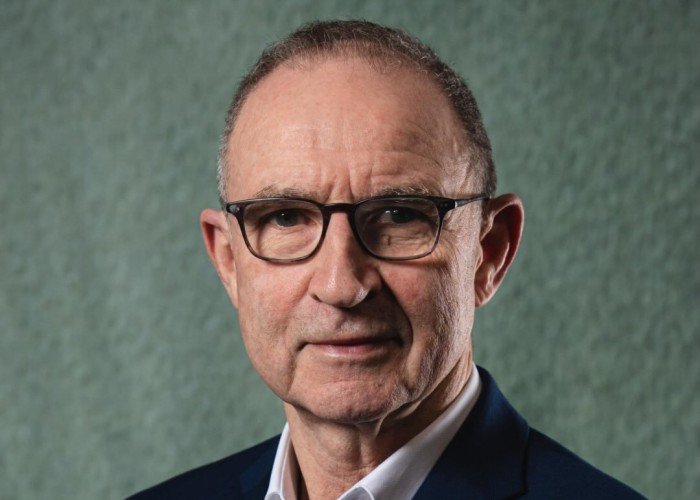
Martin O’Neill has experienced football from almost every angle: European champion, international captain, cup-winning manager and television analyst. His career stretches from football in Northern Ireland to major finals, promotion battles and the pressure of leading Celtic. Few figures have built such a varied record across both playing and management.
Born in Kilrea on 1 March 1952, he is 74 years old as of October 2026. His achievements explain his place in football history, but his life also includes unfinished law studies, a long marriage and the decision to leave a major job when his wife needed him.
Martin O’Neill’s Early Life and Education
Martin O’Neilll grew up in Kilrea, County Londonderry, Northern Ireland. He was one of nine children in a family with strong sporting connections. His father helped establish the local Gaelic Athletic Association club, and Gaelic football became part of his early life. That background gave him experience of competition before professional football became an option. His route into the game involved balancing sport with education, rather than following a direct path through an English academy.
From Law Studies to Professional Football
Martin O’Neill began a law degree at Queen’s University Belfast while playing for Distillery. He eventually chose football, leaving university when Nottingham Forest signed him in October 1971. He never completed his law qualification. However, his interest in legal cases continued beyond university, becoming one of the more unusual interests associated with his life outside sport.
His Playing Career Before Management
Martin O’Neill early breakthrough came with Distillery. In the 1971 Irish Cup final, he scored twice as the club beat Derry City 3–0. He also scored against Barcelona in the European Cup Winners’ Cup that year. Moving to Nottingham Forest took him into full-time English football. He joined before Brian Clough became manager, then helped the club through a period that changed its standing at home and in Europe.
Nottingham Forest’s Championship Years
Under Clough, Forest gained promotion to the top division in 1977. They won the English league title the following season, an exceptional achievement for a newly promoted team. O’Neill contributed as a midfielder during a spell that also brought League Cup victories in 1978 and 1979. Forest then won the European Cup in consecutive seasons, placing the club among the leading sides of that era.
The European Cup Final Distinction
He was part of Forest’s European Cup-winning campaigns in 1979 and 1980, but injury prevented him from playing in the first final. He took part in the 1980 victory against Hamburg. After Forest, his career included Norwich City, Manchester City and Notts County. A knee injury eventually ended his professional playing career in 1985.
Northern Ireland and the World Cup
Martin O’Neill earned 64 senior caps for Northern Ireland and scored eight international goals. He captained the country at the 1982 World Cup in Spain, adding international leadership to his club achievements. His playing nationality and later managerial role sometimes cause confusion. He played for Northern Ireland but went on to manage the Republic of Ireland. These are separate national teams, and his work with each belongs to a different stage of his career.
Martin O’Neill’s Teams Coached
His managerial career began outside the Football League and developed through promotion-winning teams, Premier League clubs and international football.
| Team | Years in charge |
|---|---|
| Grantham Town | 1987–1989 |
| Shepshed Charterhouse | 1989 |
| Wycombe Wanderers | 1990–1995 |
| Norwich City | 1995 |
| Leicester City | 1995–2000 |
| Celtic | 2000–2005 |
| Aston Villa | 2006–2010 |
| Sunderland | 2011–2013 |
| Republic of Ireland | 2013–2018 |
| Nottingham Forest | 2019 |
| Celtic, interim | 2025 |
| Celtic | 2026 onwards |
Building His Reputation at Wycombe
Wycombe provided the first sustained proof of his ability as a manager. He won the FA Trophy in 1991 and again in 1993, alongside the Conference title that secured Football League status. Another promotion followed through the play-offs in 1994. Taking the club from non-league football into the third tier established his reputation for building competitive teams with limited resources.
Leicester City’s Promotion and Cup Success
After a brief spell at Norwich, he joined Leicester in 1995. Promotion through the 1996 play-offs returned the club to the Premier League. Leicester won the League Cup under him in 1997 and 2000, while also reaching the 1999 final. Those results brought European football and showed that his success at Wycombe could carry into a stronger division.
Martin O’Neill and Celtic
Celtic appointed him in 2000, beginning one of the most successful periods of his career. His first season delivered the league title, Scottish Cup and Scottish League Cup. That domestic treble was Celtic’s first in 32 years. It immediately strengthened his position with supporters and established clear expectations for the seasons ahead.
Seven Trophies and a European Final
During his first Celtic spell, he won three league titles, three Scottish Cups and one Scottish League Cup. The seven domestic trophies were accompanied by a major European run. Celtic reached the 2003 UEFA Cup final in Seville, facing José Mourinho’s Porto. The Scottish club lost 3–2 after extra time, but reaching the final remains a defining achievement of his tenure.
His Later Celtic Return
Martin O’Neill returned as interim manager in October 2025 following Brendan Rodgers’ departure. Wilfried Nancy then took charge, before O’Neill returned again in January 2026. He guided Celtic to the league title and Scottish Cup that season. In June 2026, he agreed a one-year contract with an option for another year. As of October 2026, he remains Celtic manager, with nine major honours across his spells at the club.
Aston Villa, Sunderland and Nottingham Forest
At Aston Villa, he achieved three consecutive sixth-place Premier League finishes and reached the 2010 League Cup final. His four-year spell ended with his resignation in August 2010. He managed Sunderland from December 2011 until March 2013. A later return to Nottingham Forest lasted only five months in 2019. Forest dismissed him after 19 matches, with eight wins, three draws and eight defeats. These shorter appointments form part of a career that included setbacks as well as trophies.
Republic of Ireland and Roy Keane
Martin O’Neill became Republic of Ireland manager in November 2013, supported by assistant Roy Keane. Their strongest tournament achievement came at Euro 2016, when Ireland advanced to the last 16. The qualifying campaign also included a victory over world champions Germany. However, Ireland missed the 2018 World Cup after losing 5–1 to Denmark in their play-off. Difficult Nations League results followed, and the management team departed in November 2018. His final record was 19 wins, 20 draws and 16 defeats from 55 matches.
Martin O’Neill’s Wife and Children
Martin O’Neill wife, Geraldine, has shared much of his journey through professional football. They met in 1967 and married in 1979. The couple have two daughters, Aisling and Alana. Family became central to a major career decision in 2005. O’Neill left Celtic to support Geraldine during treatment for cancer, later identified as non-Hodgkin lymphoma. That decision interrupted a successful managerial spell and placed family needs ahead of football. Historical accounts of her treatment should not be treated as an update on her health today.
Age and Life Beyond the Dugout
Martin O’Neill turned 74 on 1 March 2026 and will turn 75 in March 2027. His continued involvement in management has extended a football career that began more than five decades earlier. Outside coaching, he has worked in broadcasting and shared his experiences through books and conversations. His knowledge spans football before the Premier League, European competition and the demands of modern management.
Autobiography and Podcast Work
Martin O’Neill autobiography, On Days Like These, was published in November 2022. It covers his playing years, Brian Clough, management and the personal experiences behind his career. He also narrated the audiobook. He later joined commentator Clive Tyldesley for The Football Authorities podcast. The programme gave him another setting to discuss the game and revisit experiences from his long career.
Martin O’Neill’s Net Worth
His exact net worth has not been independently verified. Celebrity finance websites have placed estimates between US$10 million and US$15 million, but those figures should not be presented as confirmed wealth. His earnings have come through professional football, managerial contracts, broadcasting and publishing. Even so, earnings alone cannot establish net worth. A reliable calculation would require details of assets, debts, taxes and investments that are not available in a complete, verified form.
Recognition and His Place in Football
Martin O’Neill became chair of the League Managers Association in 2024, succeeding Howard Wilkinson. In February 2026, the association recognised him through its Hall of Fame 1,000 Club for his professional managerial milestone. His lasting contribution reaches across different levels of football. Wycombe gained league status, Leicester won major cups, Celtic collected titles, and Ireland reached a European Championship knockout stage. Alongside those achievements stand his European victories as a player and the family commitments that shaped his choices. Together, they explain a career whose importance extends well beyond one club or one successful season.
